Erik Friedrich · 19 November 2026
Tracing Interconnections Between Streamlined Domain Portals and Worldwide Cybersecurity Protocol Evolution
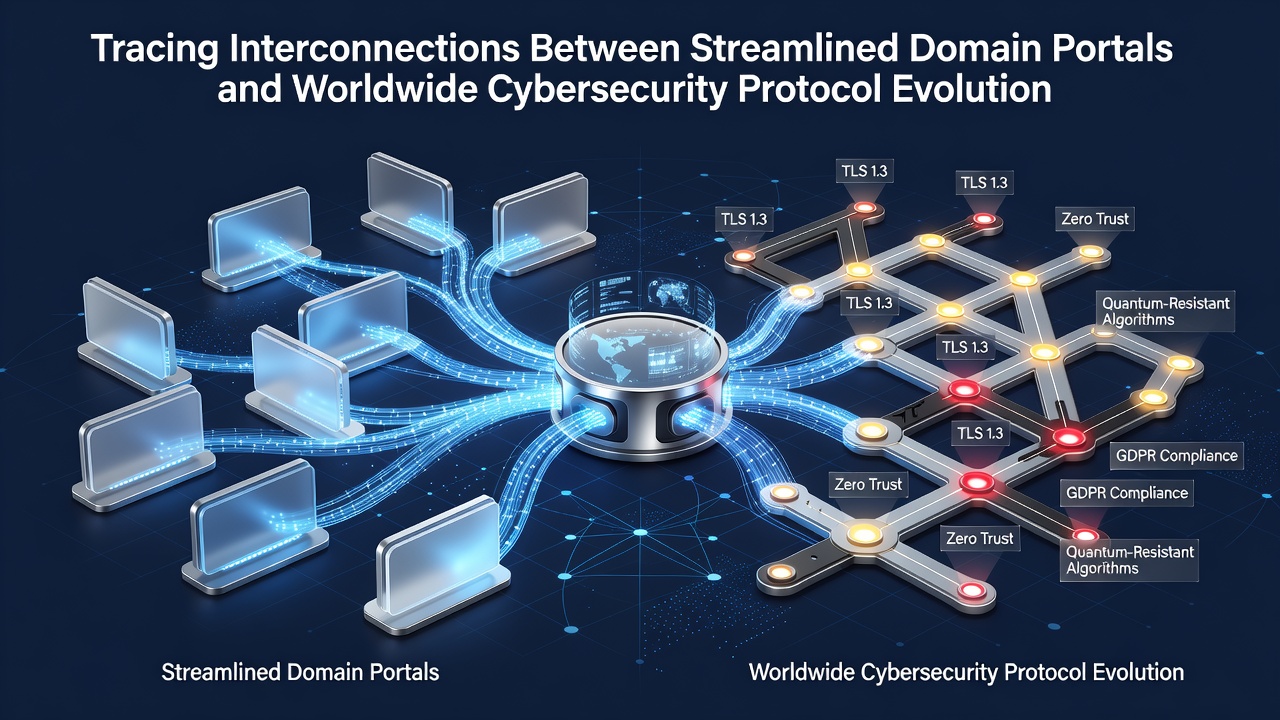
Streamlined domain portals have become central nodes in the broader network of cybersecurity protocol development, as these platforms handle registration, configuration, and ongoing management tasks that directly intersect with standards for encryption, authentication, and threat mitigation. Observers note that portals operated by major registrars now incorporate automated checks for DNSSEC deployment and certificate issuance, processes that align with updates from bodies such as the Internet Engineering Task Force and regional cybersecurity agencies. Data from industry reports shows increased integration of these features since the early 2020s, when simplified interfaces began replacing legacy command-line tools for users managing large portfolios.
Domain Portals as Gateways for Protocol Adoption
Registration platforms have evolved to embed compliance modules that reflect shifts in worldwide cybersecurity expectations, including requirements for multi-factor verification during transfers and real-time monitoring for anomalous activity. Researchers at academic institutions have documented how these interfaces reduce the time between protocol announcement and practical rollout, since automated workflows guide users through steps like enabling DNS over HTTPS or configuring CAA records without manual intervention. One study from a North American university tracked adoption rates across thousands of domains and found that portals with guided wizards achieved higher compliance percentages compared to traditional systems.
International coordination plays a visible role here, because standards developed in one region often propagate through portal updates that reach users globally. For instance, guidelines from the European Union Agency for Cybersecurity have influenced how portals handle data localization during registration, while similar frameworks from Australian and Canadian authorities emphasize secure key management that portals now surface through dashboard prompts. This cross-border alignment occurs because domain management touches on both technical infrastructure and regulatory obligations that vary by jurisdiction yet share common technical foundations.
Technical Shifts and Their Platform Implications
Protocol evolution around transport layer security and public key infrastructure has prompted portals to update their backend integrations, particularly as new cipher suites and certificate transparency logs become mandatory in certain sectors. Figures from monitoring services indicate that streamlined portals now surface alerts for expiring certificates and mismatched configurations, features that emerged in response to documented incidents where misconfigurations left domains exposed. Those who manage high-volume registrations often discover that these built-in notifications correlate with fewer reported breaches tied to domain-level weaknesses.
Updates scheduled for broader implementation around November 2026 are expected to further tighten requirements for authenticated registration data, building on earlier changes that limited public WHOIS exposure. Portals have already begun testing interfaces that route verification through decentralized identity systems, an approach that mirrors discussions at global forums on balancing privacy with accountability. Evidence from pilot programs suggests these adaptations maintain operational speed while satisfying new verification layers introduced by standards organizations.
Global Regulatory Influences on Portal Design
Regulatory developments in Asia and Latin America have also shaped portal functionality, as countries introduce data residency rules that affect how domain information is stored and accessed. Portals serving international clients now include region-specific toggles that align with local cybersecurity mandates, reducing friction for users who operate across borders. A report issued by a research consortium spanning several continents highlighted that such modular designs correlate with faster adherence to updated protocols, because the interfaces isolate compliance tasks rather than requiring separate external tools.
Case examples illustrate the pattern: organizations that migrated to portals with integrated threat intelligence feeds reported quicker responses to emerging vulnerabilities, since the platforms push notifications tied to protocol revisions from sources like the National Institute of Standards and Technology. These connections demonstrate that streamlined interfaces do not merely simplify user experience but also serve as distribution mechanisms for evolving security practices worldwide.
Conclusion
The linkages between domain portals and cybersecurity protocol development continue to strengthen through shared technical requirements and regulatory pressures that span multiple regions. As portals refine their automation capabilities and standards bodies release successive updates, the operational overlap between registration management and threat defense expands accordingly. Data accumulated over the past decade shows consistent patterns where platform enhancements track closely with protocol milestones, creating measurable effects on domain security postures across diverse user bases.