Ellis Washington · 22 October 2026
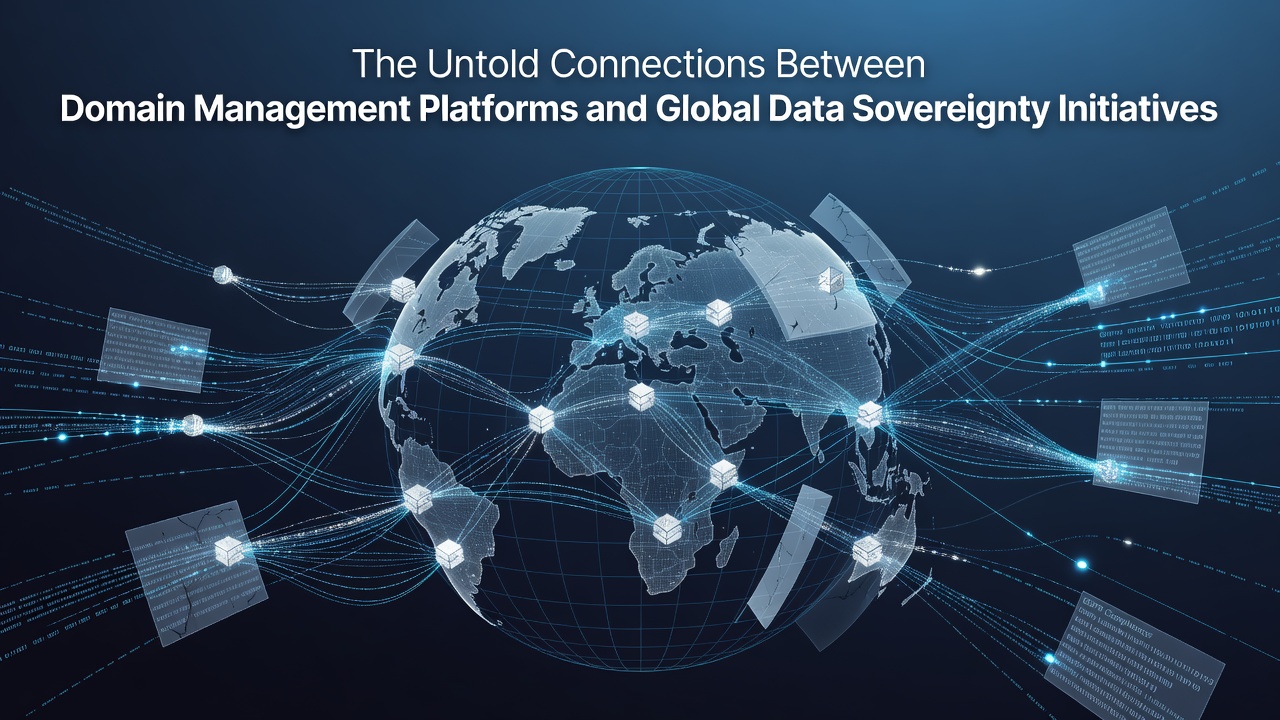
The Untold Connections Between Domain Management Platforms and Global Data Sovereignty Initiatives
Domain management platforms handle registration, DNS configuration, and WHOIS data storage for millions of internet addresses each day, while global data sovereignty initiatives require that personal and operational information remain under specific national jurisdictions. These two systems intersect when registrars store user records, process location-based queries, and respond to cross-border legal requests for domain ownership details. Observers note that such intersections have grown more complex since the early 2020s as countries enacted stricter localization rules.
How Domain Platforms Store and Transfer Data
Registrars maintain databases that contain registrant names, addresses, email contacts, and nameserver assignments, and many of these records move across international borders when users select cloud-based management tools hosted in different regions. Data sovereignty rules in the European Union, Canada, and several Asia-Pacific nations require that certain categories of personal information never leave designated geographic zones without explicit safeguards. Platforms that offer automated failover or multi-region DNS services must therefore map their server locations against these rules to avoid compliance violations.
Regulatory Milestones Shaping the Landscape
Evidence from regulatory filings shows that the EU's Data Act and updated eIDAS regulations have pushed registrars operating in member states to segment customer databases by residency status. Similar requirements appear in Canada's Digital Charter Implementation Act and in Australia's Privacy Act amendments, each of which ties domain record handling to local data residency obligations. Researchers at academic institutions tracking these changes report that registrars without localized storage options have begun offering region-specific data centers to meet demand.
October 2026 marks the scheduled enforcement date for several harmonized reporting standards under the Global Data Sovereignty Forum, an initiative involving representatives from the EU, Canada, Singapore, and Brazil. These standards will require domain platforms to log the physical location of every WHOIS record update and to provide audit trails to national authorities within defined timeframes. Figures released by participating governments indicate that more than 180 million domain records will fall under the new logging regime once implementation begins.
Technical Mechanisms Linking DNS and Sovereignty
DNS query routing decisions directly affect where request metadata lands, and some platforms now integrate geofencing at the nameserver level so that queries originating in one jurisdiction resolve only through servers inside that same jurisdiction. This approach satisfies sovereignty mandates while preserving resolution speed. One study conducted across European and North American networks found that geofenced DNS configurations reduced cross-border data flows by up to 47 percent for participating registrars.

Encryption standards also play a role. Platforms that encrypt zone files at rest and in transit must still designate key management locations, because many sovereignty frameworks treat encryption keys as protected data. Those who've examined registrar architectures note that key escrow arrangements with national authorities have emerged as a common workaround in jurisdictions that demand access capabilities.
Regional Variations in Practice
European registrars face the strictest localization demands under GDPR and the upcoming Data Act, whereas platforms serving markets in Southeast Asia often navigate lighter but rapidly evolving rules from Singapore's Personal Data Protection Commission. Canadian providers, by contrast, balance federal privacy legislation with provincial variations, particularly in Quebec. Industry reports compiled by trade associations show that registrars with multi-continent operations now maintain at least three separate data architectures to accommodate these differing regimes.
Academic papers examining WHOIS accuracy rates after the introduction of localized storage reveal that compliance-driven segmentation has not reduced data quality when platforms deploy automated validation scripts within each region. The same papers document that smaller registrars lacking resources for multiple data centers have formed consortium agreements to share compliant infrastructure.
Looking Ahead to Coordinated Global Standards
Coordinated efforts among governments and technical bodies continue to refine how domain data flows intersect with sovereignty requirements. October 2026 will bring the first large-scale test of unified audit protocols, and early pilot programs already indicate that automated compliance dashboards will become standard features in major domain management interfaces. Observers tracking these developments point to ongoing work at standards organizations as the mechanism that will determine whether current fragmented approaches converge into a more unified global framework.
Conclusion
Domain management platforms and global data sovereignty initiatives remain tightly coupled through the storage, transfer, and audit of registration records. Regulatory timelines, technical routing choices, and regional legal variations all shape how these connections evolve, with measurable impacts on data center placement and compliance tooling. As October 2026 approaches, the sector will gain clearer benchmarks for evaluating whether existing architectures meet emerging unified standards.